
News
In manual or semi-automatic labeling processes, operators constantly decide which label to use, where to apply it, and whether it is correct. These judgment points are major sources of labeling errors. Print and apply labeling machines shift decision-making from people to systems.
1. From Manual Label Selection to System-Driven Data
In automated labeling workflows:
Label data is sent directly from ERP, MES, or WMS
Printing and application are triggered by production signals
Operators no longer choose label versions manually
This greatly reduces the risk of using incorrect labels.
2. Label Placement Controlled by Mechanisms and Parameters
Instead of relying on visual judgment, machines use:
Fixed reference points
Mechanical guides and stops
Parameterized label position settings
This converts subjective decisions into repeatable mechanical actions.
3. Rule-Based Templates Reduce Complexity
Labeling machines typically use predefined templates:
Each product corresponds to a specific template
Layout, fonts, and barcode rules are preset
Project changes only affect data, not logic
Operators focus on confirmation rather than judgment.
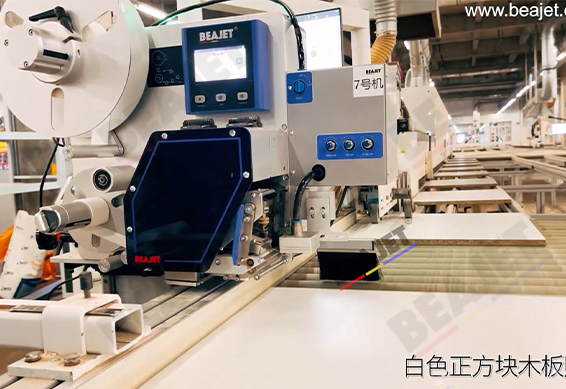
4. System Alerts Replace Manual Error Detection
In manual workflows, errors are often found too late. Automated systems provide:
Missing data checks
Print and apply failure alarms
Integration with scanners or vision systems
Judgment is shifted upstream, reducing inspection burden.
5. Scenarios with the Greatest Impact
The reduction in manual judgment is most noticeable in:
Multi-SKU or multi-project production
Frequent label changes
High-volume or time-critical shipping
Industries with zero tolerance for mislabeling
In these cases, automation improves both reliability and control.
If your process involves many manual judgment points, consult the manufacturer’s technical team before implementation. Hangzhou Beajet Digital Technology Co., Ltd. typically identifies these decision points first and optimizes them through system integration and equipment configuration to reduce human-related risks.